01
Positioning
We define who you serve, what you compete against, and the single claim you can defend better than anyone else. This becomes the reference point for every messaging and design decision that follows — internal and external.
Brand strategy is the set of decisions that make every other decision easier — what you stand for, how you're named, how sub-brands relate to each other. We build the positioning and architecture that hold up as you scale into new markets.
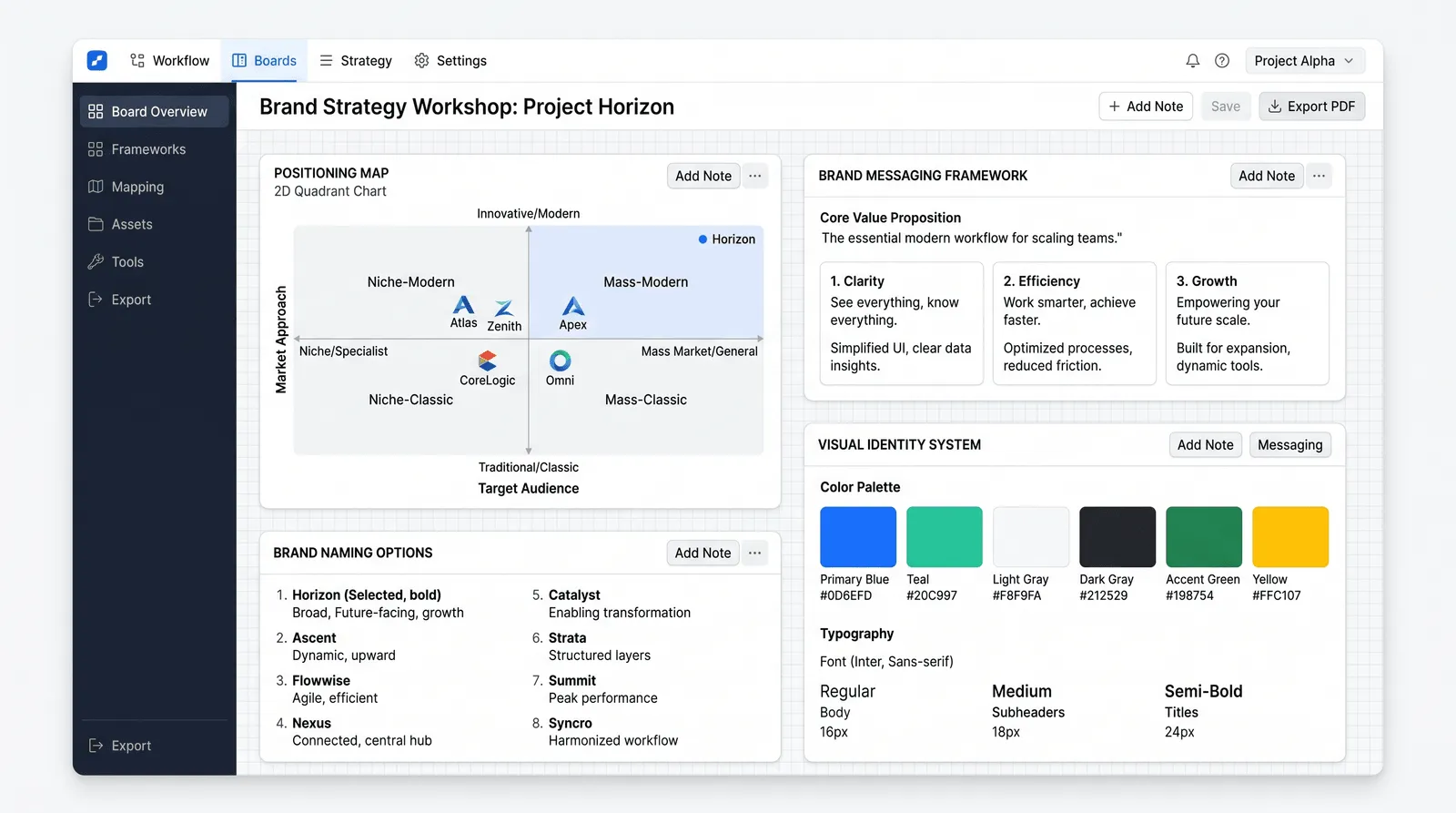
Most companies confuse a logo with a strategy. They hire a designer before they've answered who they're for, what they're against, and why a customer should choose them over three interchangeable competitors. The result is a visual identity with nothing underneath it — messaging that shifts with whoever wrote the last deck, naming decisions made under deadline pressure, and a brand architecture that breaks the moment a second product or market gets added. Positioning work has to come first, because every design, campaign, and hire downstream either reinforces it or contradicts it.
We define who you serve, what you compete against, and the single claim you can defend better than anyone else. This becomes the reference point for every messaging and design decision that follows — internal and external.
Whether it's a company, product line, or sub-brand, we run naming through legal availability, domain and trademark checks, pronunciation across markets, and fit with the positioning — not just what sounds good in a room.
As you add products, services, or markets, we design how they relate — one master brand, endorsed sub-brands, or a house of brands — and document it in a platform your team can apply without us.
We audit your current positioning, interview stakeholders and customers, and map the competitive field to find where you're genuinely different.
In working sessions, we test positioning options against your business goals and narrow to the claim you can own and defend long-term.
We develop naming, architecture, and messaging in parallel, checking each decision against the positioning before it moves forward.
Everything is documented in a brand platform your team, and any future agency, can apply consistently without reinventing it each time.
A clear positioning is only useful once it's applied. From here, the platform feeds directly into identity design, the website, and every campaign you run — so the brand stays consistent whether a customer meets it in an ad, on your site, or in a sales conversation.