01
Performance Engineering
Built on Next.js with server-side rendering and image and asset optimization by default, so pages load fast and pass Core Web Vitals without after-the-fact patching.
We build websites and digital products on modern, headless architecture — fast by default, easy for your team to update, and structured so search engines and AI systems can actually read them.
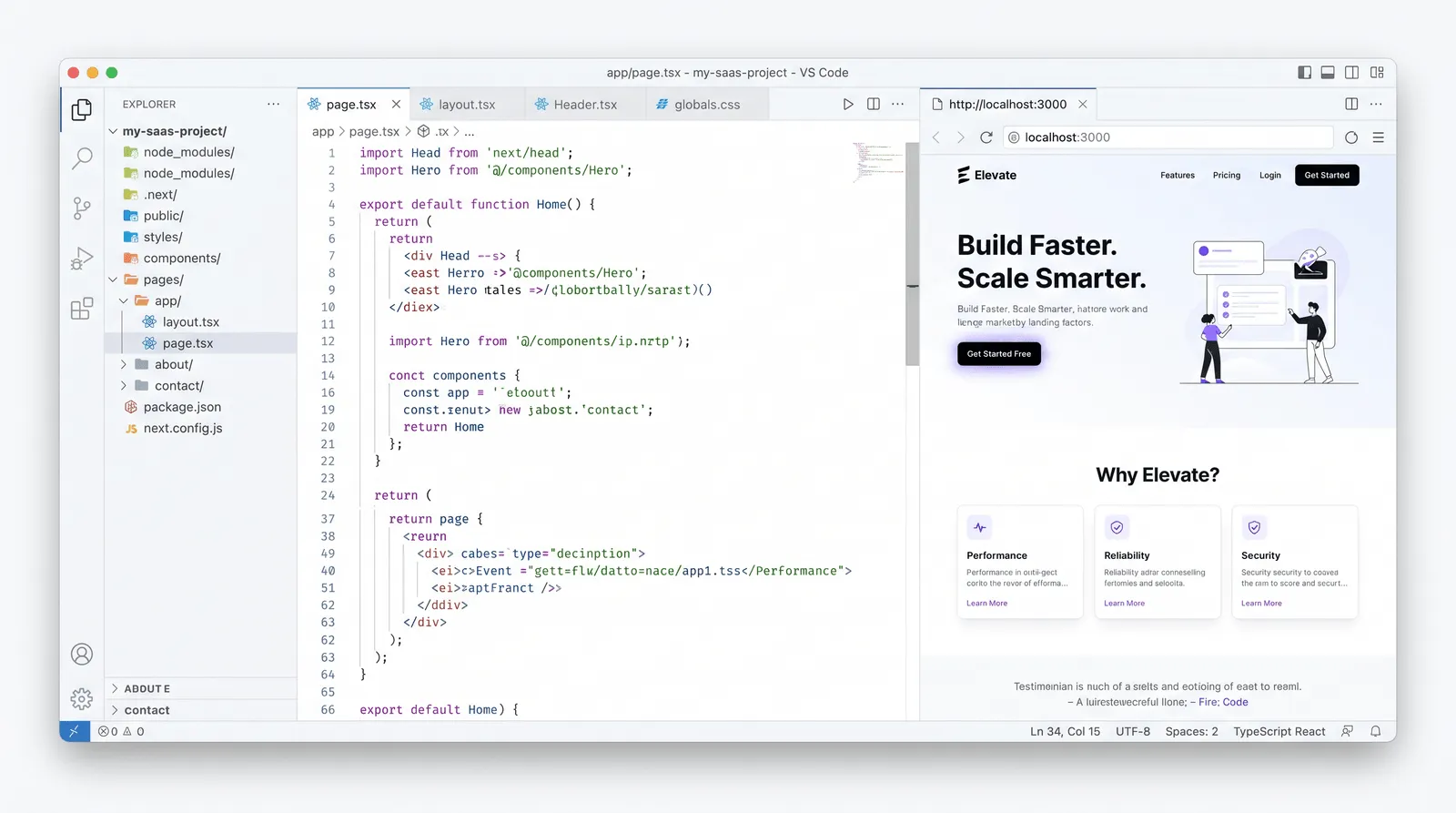
Most business websites are built once, handed off, and then quietly rot — locked into a page builder nobody on the team understands, too slow to pass Core Web Vitals, and impossible to update without calling the original agency. The WordPress-plugin approach that worked a decade ago now produces bloated, insecure sites that search engines and users both penalize. A website is not a brochure you publish once; it's a product that needs to load fast, adapt to new content types, integrate with the tools you actually run your business on, and keep performing as you grow.
Built on Next.js with server-side rendering and image and asset optimization by default, so pages load fast and pass Core Web Vitals without after-the-fact patching.
Content lives in a headless CMS, decoupled from the frontend, so your team edits pages without a developer while the site stays fast and secure.
Every page is structured around a clear action — book, buy, enquire — with tracking built in from day one so you can measure what's actually working.
We review existing site performance if any, define the content model, integrations needed, and the technical scope before writing code.
We design the information architecture, page templates, and visual design in parallel with the technical stack decisions.
The frontend and CMS are built and tested against real content, with performance benchmarks checked at every stage, not just at the end.
We deploy, verify tracking and redirects are correct, and monitor performance and errors for the first weeks after launch.
A fast, well-structured site is the foundation everything else runs on — SEO can't compound on a slow site, paid campaigns waste budget on pages that don't convert, and automation has nothing to connect to. From here, the same foundation feeds directly into SEO and paid media.